Automotive · Founder story & product walkthrough
Why I Built
CarTruvo.
Selling my own cars left me looking for a better option. Here is the thinking behind the marketplace I’m building.
Explore the product decisions ↓
The experience behind the idea
I wanted another option.
When I sold cars to Carvana, the offers often felt too low. I understood the appeal of a quick sale. What I wanted to know was whether I could find a buyer willing to pay more for the same car.
The alternative usually meant Craigslist or Facebook Marketplace. A car would sit alongside furniture, household items and almost everything else. I’ve called those sites the “junk drawer of the internet.” They can connect people, but I wanted a place built around the vehicle and the decision to buy it.
That became the starting point for CarTruvo: a dedicated marketplace where an independent seller can present a car, choose an asking price and talk directly with prospective buyers.
The tradeoff deserves an honest explanation.
A business buying a car for resale considers its costs, risks and margin. Accepting its offer can save a seller time and effort. Sometimes that convenience is the right choice.
A private sale asks more of the owner. There are photographs to take, questions to answer and arrangements to make. It may bring a higher price, but that is never guaranteed. I wanted to make the work of presenting the car and finding a buyer more manageable.
01 · Start with the car
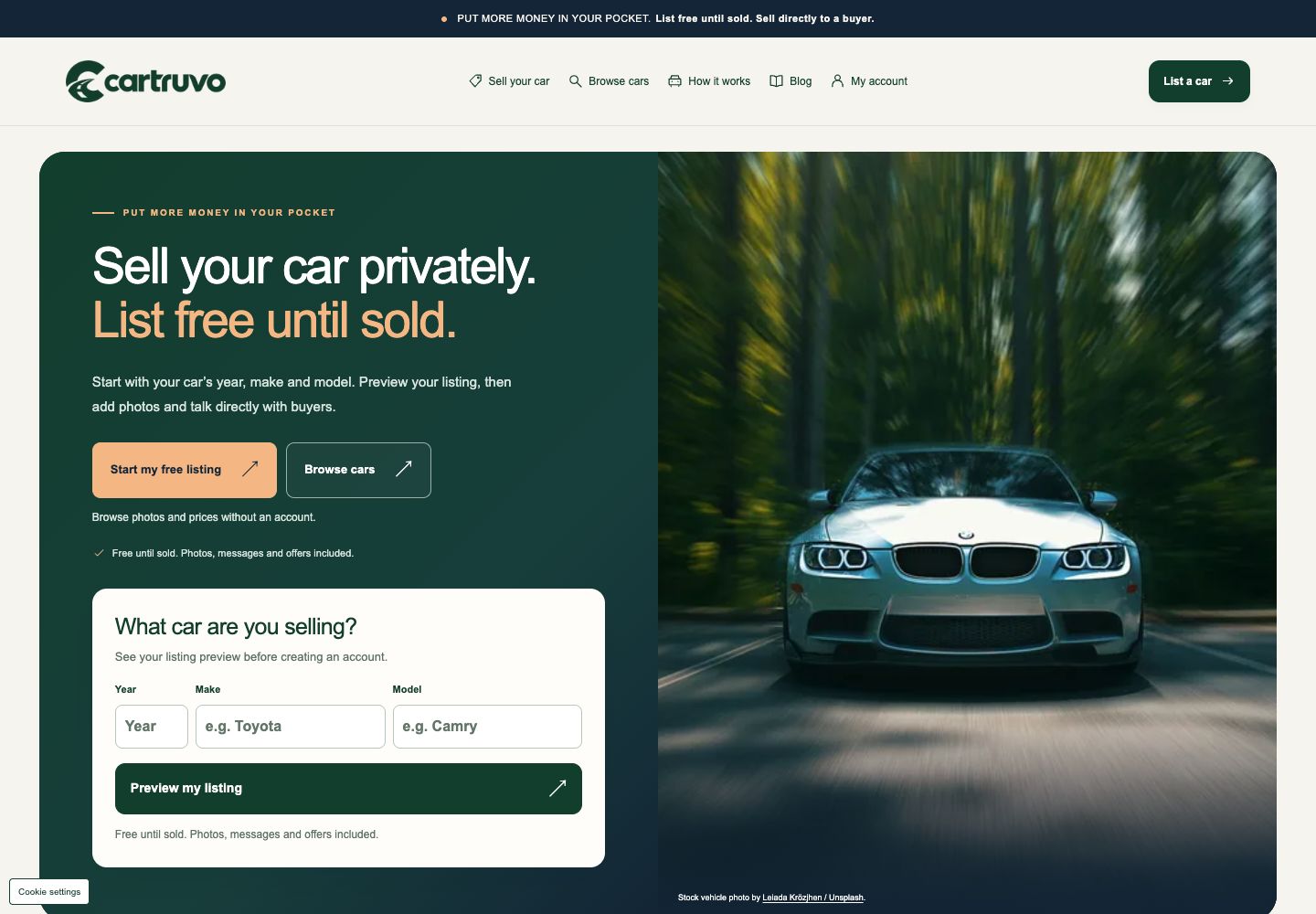
A listing begins with what the seller knows.
The first step asks for the year, make and model. A seller can see a listing preview before creating an account. From there, the work is specific to the vehicle: photographs, mileage, condition, history and an asking price.
Those details matter to a buyer deciding whether to make contact. The listing gives them one place to look, and gives the seller a vehicle page they can share through their own messages, email or social accounts.
02 · Put the asking price in context
A comparison should help you decide.
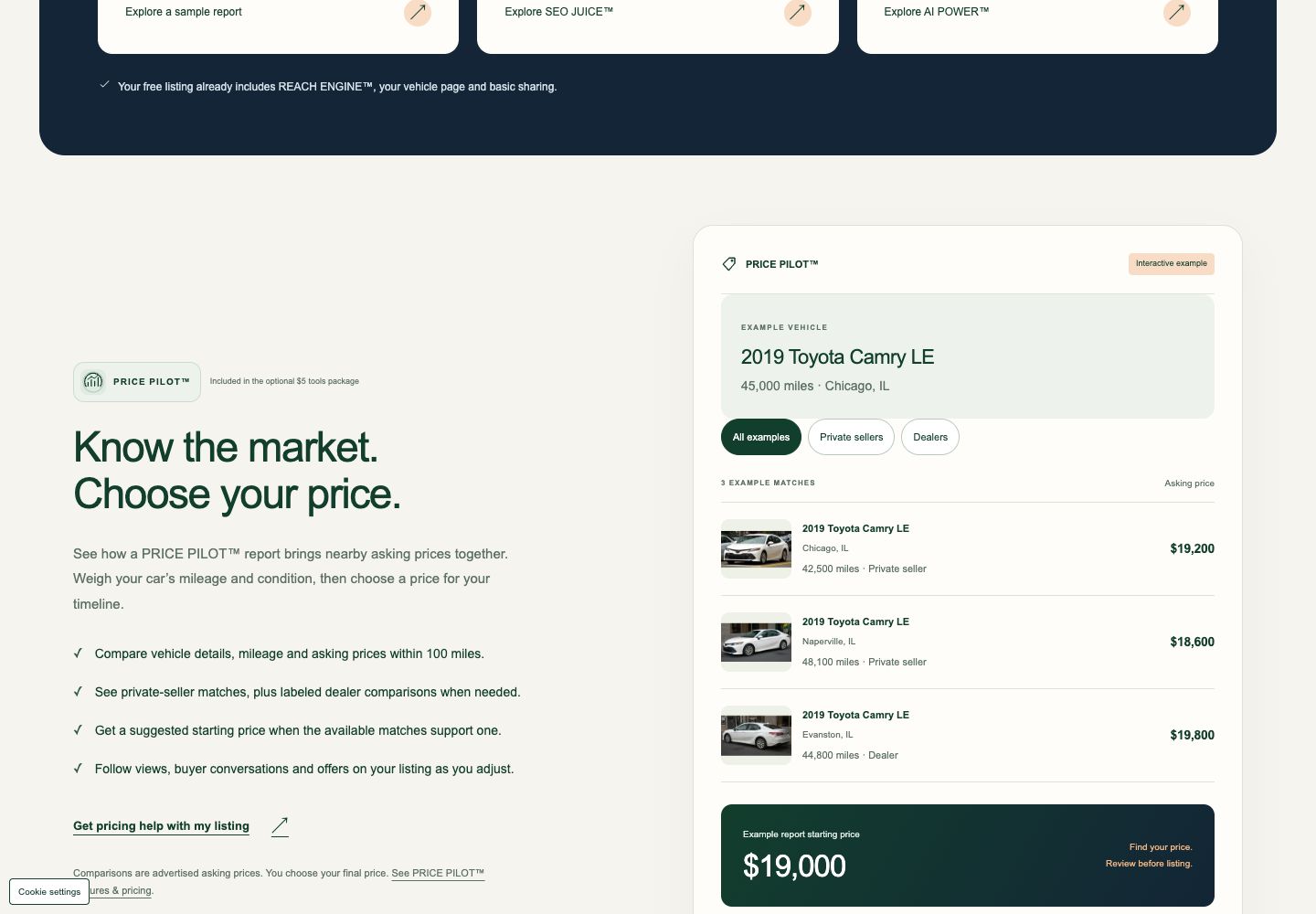
PRICE PILOT™ brings together advertised asking prices for comparable vehicles. Mileage, location and seller type give those prices context. When the available matches support it, the report can suggest a starting asking price.
An asking price is not a completed sale. The comparisons do not establish what another seller received, and they cannot promise what your car will bring. The final price remains the seller’s decision.
As of November 20, 2026, PRICE PILOT is part of CarTruvo’s optional $5 tools package for one vehicle, including one report and two refreshes. Publishing the basic listing is free until sold or removed. See the current features and pricing ↗
03 · Compare what you could keep
The headline price is only the beginning.
A higher sale price is useful only in the context of the rest of the transaction. Loan payoff and selling costs affect what remains. Time, convenience and any trade-in tax treatment deserve consideration too.
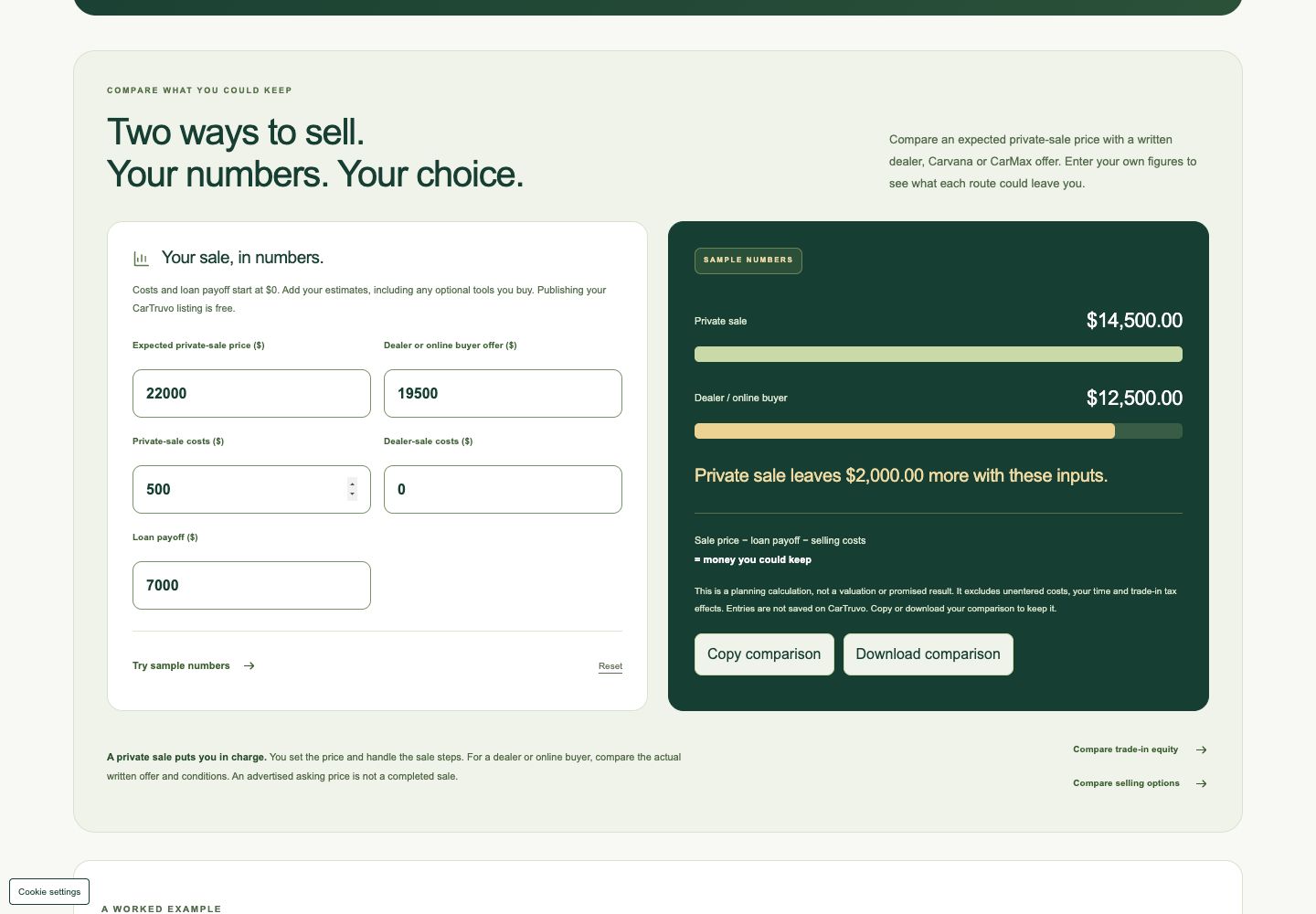
CarTruvo’s free proceeds calculator lets someone enter their own expected private-sale price, a written dealer offer, loan payoff and selling costs. It shows the arithmetic for both routes without requiring an account.
The sample below illustrates the calculation. Its figures are fictional. It excludes unentered costs, the value of the seller’s time and trade-in tax effects; those need separate consideration.
The work continues after the listing.
Sellers can receive messages and nonbinding offers, then arrange the next steps with a prospective buyer. Inspection, payment, paperwork and pickup still require care. CarTruvo helps people present information and connect; it does not remove the responsibilities of the sale.
Five Star Vacation Rentals taught me how much a listing shapes expectations before the first conversation. A vehicle is a different purchase, but the need for accurate photographs and useful details is familiar.
CarTruvo began with my own frustration. The task now is to build something that earns its place in someone else’s selling process.